Recent Posts

Showing posts with label 3D project 2. Show all posts

Wednesday, February 23, 2011

Homework assigned Monday, 2/21

2D—LINE
Mark making
  1. draw 100 parallel lines with your eyes closed
  2. attack the page with a mark making tool

    Krystal attacks the page with a sponge


  3. draw 200 lines. 100 with each hand at the same time
  4. crumple paper and smooth, then draw lines (4 minutes)
  5. fold paper and smooth, then draw lines (4 minutes)
  6. tape your page down, write your name 100 times with your eyes closed
  7. tape your page down, write a thought over and over until the page is full (plus 10 minutes?)
  8. bring drawings to class on Monday
  9. photograph each carefully (no arm or camera shadow).
    Experiment with cropping and/or zooming.
    Post 5 most interesting photos before Friday.
STORY LINE – get at least 4 reviews of your story using the handout
REVISE REWRITE story line – post to blog

3D—MODULAR MADNESS
Pre crit write up for Modular Madness
needs done before Friday. See downloadable handout.

LECTURE—Read textbook in the making, chapter on inspiration
Post all mapping lists to blog.
Interpret requests per your understanding (see lecture 3 handout—mapping)

Your Modular Madness write ups are due NOW


You need to post them by 9 am today.

Write up guide (respond to all questions in post)

Tuesday, February 22, 2011

Prep for Modular Madness critique
to be completed before Wednesday

Review and respond (download handout) to each of the following in regards to your project and process. Post  your responses and an image (may be process image) to your blog before Wednesday, February 23, 9 am. Choose three major categories to present to class (limit self to 3 minutes). Quickly tell us why you choose these three? Then present the three. BE SPECIFIC.

MATERIALS
  1. Sensitive use of materials: does the form of the overall piece respond to or resonate with the objects chosen as modules?
  2. Could the piece be made from another object just as well, or is there precise/necessary correspondence between the objects and the structure?
  3. Explain any material difficulties in usage?
  4. Meaningful discoveries?
PROCESS/AMBITIOUSNESS
  1. Does the piece rise above the ordinary in terms of scale, materials or effort?
  2. How did the piece change from initial mental imaginings to final piece?
  3. Was the initial idea or final piece more ambitious? How so?
CRAFTSMANSHIP
Is the way the piece put together helping the overall effect or distracting from it (How so?)
FORM
  1. What are the dominant formal elements (point, line, shape, color, texture, value, space) visible in the work? Are these elements important to the piece? In what ways?
  2. What are the dominating principles (scale, hierarchy, repetition, rhythm, unity, contrast, balance, space, gravity, continuance, similarity/difference) visible or implied in the work? Explain how each dominating principle helps strengthen the impression of the work or detracts.
CONCEPT
  1. Does piece relate to the source objects history, function or purpose?
  2. If so, how?
  3. How does the presentation of the piece alter the viewers understanding of the source object?
PRESENTATION
  1. Why here?
  2. What is the relationship of the work to the space?
  3. How do the surrounding elements impact the viewing and impression of the piece?
  4. Does the piece respond or ignore what is around it? How so?

MM pre crit write ups
Martin's is a great example.

excerpt from Martin's form and concept write up

CONCEPT... 
What are the dominating principles (scale, hierarchy, repetition, rhythm, unity, contrast, balance, space, gravity, continuance, similarity/difference) visible or implied in the work? Explain how each dominating principle helps strengthen the impression of the work or detracts.

The main dominating principles found in my piece are repetition, contrast, and continuance. The repetition found in the piece comes from the cups following each other in sequence. This also runs into the continuance, which can be seen in the way the cups flow in one direction and in relation to the other lines of cpus around it. There can also be contrast seen in the variation between the white space found on the edge of the cups and the vibrant red colors. This strengthens the piece overall by keeping the viewers eyes locked onto the object.

CONCEPT
Does piece relate to the source objects history, function or purpose? 
If so, how?
The piece relates to the objects function in the way that instead of a liquid coming out of the cup like would normally occur there is instead a procession of cups coming out.

How does the presentation of the piece alter the viewers understanding of the source object?
It creates the sense that the cups are alive rather than an inanimate object through the placement of the cups in a flowing way.

Tuesday, February 15, 2011

Popsicle sticks play date in Paris!
True madness of a modular nature
Jada please, please bring me as chaperon

This is a serious sample of a blog process post! Go Jada!

First a brief history about popsicle sticks. They were invented by an eleven year old named Frank Epperson in 1905. So they're more than a hundred years old! Before they were "popsicle" sticks, they were "Epsicle" sticks. Epperson came by the idea on accident during a cold winter season. He had left his fruit flavored soda outside on the porch with a stir stick in it, but when it had frozen over and he tasted it, he thought it was a delicious treat. From there it took him 18 years to develop the idea of frozen ice on a stick. Soon it was named Epsicle Ice Pop. Later his children renamed it Popsicle as we know it today. He sold his Popsicle idea to the Joe Lowe Company of New York and Good Humor now owns the "Popsicle Rights."(I got my information from: http://inventors.about.com/library/inventors/blpopsicle.htm)

So anyway, here are a few things I came up with while "playing" with my object(s). We had TONS of fun!

 
I listened to my object.. 

As did Zack. Here he is listening to his Q-tips.


Then I smelled it!

I tasted it...gross.


I examined it very closely!

Then we took a much needed nap!

This is the natural form it fell in.

But I had to push it aside. :(
...
After all of this work, me and my sticks decided to have some real fun!
First we went to the beach and watched the sunset. Isn't it beautiful?
Next we went on a roller coaster at Six Flags Over Texas. This was so much fun, but we were both sooooo scared! :)
After that we traveled down to Cozumel, Mexico and scuba-dived with the fishes! :D

We ended the day in Paris, France.
What an exciting time we had! :D<


We hope you enjoyed our photos!

Jada's process video part 2
video
We will check back tomorrow Jada!

Monday, February 14, 2011

am so looking forward to see what happens with
your modular MADNESS!

I found the play date pics and today's kicking it into gear very...well, you guys wowed me!

wow on!

Thursday, February 10, 2011

Modular Madness PLAY DATE!

 WASHers play with their modules!
Do it before Monday. Document it. Post up!
Sarah chose plate madness.


Now that is some serious repetition and rhythm in a very good way!

3D Modular Madness Wednesday ICE DAY adaption

COMPLETE THE FOLLOWING BEFORE MONDAY, FEBRUARY 14

Listen and PLAY with your Modular Madness materials
  1. Layout/dump out objects
  2. Play with them and arrange them
    according to their intrinsic qualities…line, shape, texture, function, etc
  3. Make/play with materials into 5 arrangements; carefully photograph each arrangement post to blog (make more if you feel like you haven't found a good, natural system for the materials)
  4. Carefully read 3D Project 2 Modular Madness download
  5. Draft/sketch up two possible directions for your piece to go. Include ideas about how you are going to hold it together (POST to blog).
  6. Bring all necessary materials, sketches Monday plus primary binding method materials and at least one alternative system and materials
Relevant artists: Tara Donovan, Theo Jansen, Doris Salcedo, Richard Long, Andy Goldsworthy, Carl Andre, Sol Lewitt, The Art Guys, Dan Steinhilber, Patrick Doughherty, Rebecca Ward.

BLOGS due MONDAY for GRADE 1 of Visual Journal.

Carl Andre plays with wood.


Monday, February 7, 2011

Modular Madness research

Modular madness materials to collect and research to do before Wednesday.

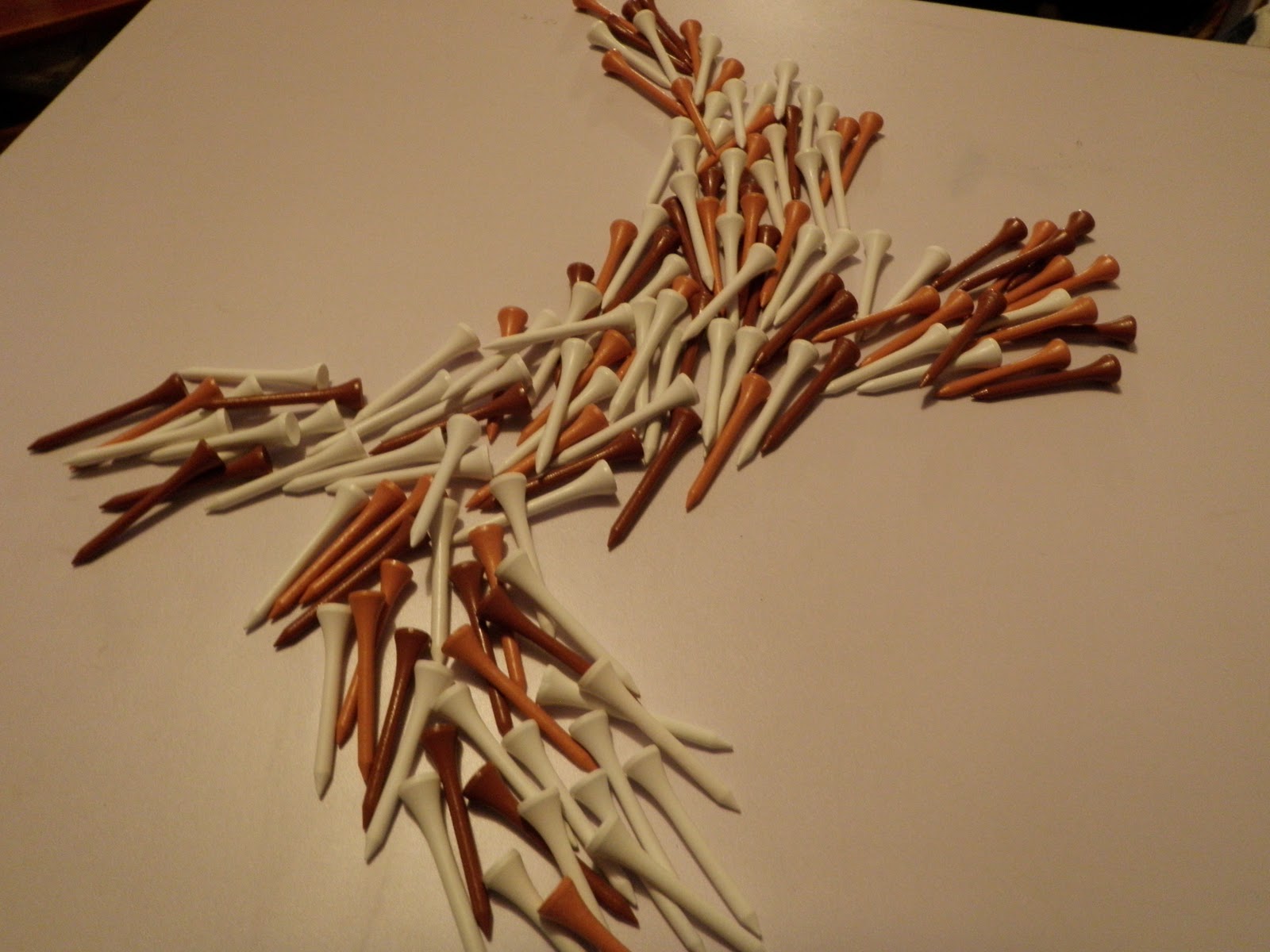
Bring 100 objects (found or cheap…no craft crap…ie beads)
Bigger objects = 100 (ie cups…5” or larger) of 'em
Smaller objects = 1000 (fingernail clippings, hair, tea bags, toothpicks, seeds, etc)
The smaller the object the more you have to bring.
Research objects
  1. History of object and material
  2. Purpose of object
  3. Dictionary/Thesaurus rabbit trail of object and purpose
  4. Symbolic/Metaphor/Lore/Urban legion
  5. Object or word usage -- Poems, Literature, Song lyrics, Brand names, etc
Research multiple binding agents…bring different options…glue, joint, wire/thread, ???

Morgue blog
Post picture of selected material to blog
Post research data to blog
Bring research notes in morgue

WASH

2D :: This studio course introduces the studio arts, contemporary art history, theory and technology to the incoming student. It is designed to immerse students in an intense program of researching, interpreting and creating art in the twenty-first century. ART 130 emphasizes the 2-Dimensional Arts but pushes into the 3rd and 4th as well. Its companion courses, ART 131 and ART 132W, support this studio course with lectures, readings, visiting artists and demonstrations.

3D :: This studio course introduces the studio arts, contemporary art history, theory and technology to the incoming student. It is designed to immerse students in an intense program of researching, interpreting and creating art in the twenty-first century. ART 131 emphasizes the 3-Dimensional Arts as well as pushing into the 4th Dimension.

Lecture :: This course introduces the concepts, theories and information for development in ART 130 and ART131, the studio components linked with this visual arts foundation course. It is an arena for students to experience lectures, demonstrations, seminar activities and visiting speakers, as well as the more traditional aspects of the discipline. It is geared towards contemporary visual concerns and uses experimental techniques to expose students to an array of styles and methodologies.

Think bootcamp for artists!